



Holiday Learning Tips: Quick Ideas for Families

Wishing all our students and families a joyful and restful Christmas break!
These weeks away from school are a wonderful opportunity to support your child’s learning in simple, enjoyable ways, reading together, playing games that build thinking skills, exploring nature, or involving them in everyday activities like cooking and budgeting. Small moments of conversation, curiosity, and hands-on experiences help maintain academic progress, nurture confidence, and make the transition back to school smoother.
Thank you for partnering with us. Your involvement truly makes a difference. We wish your family a happy, restful, and enriching holiday season!
Below are a few short, friendly tips to keep learning light, fun, and engaging over the holidays for each school level.

Early Years (Ages 3–5)
-
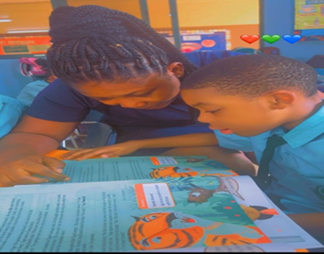
Daily Reading: Read together for 10–15 minutes, pointing to pictures and asking simple questions like, “What do you see in this picture?” or “What do you think will happen next?”
-
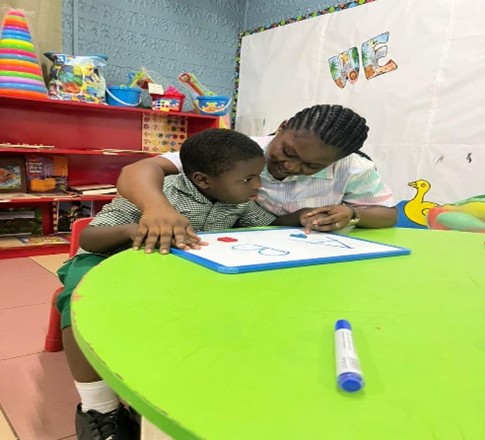
Letter & Number Hunt: Play games around the house, e.g., “Find something that starts with the letter B, F, A,” to reinforce letter and number recognition.
-
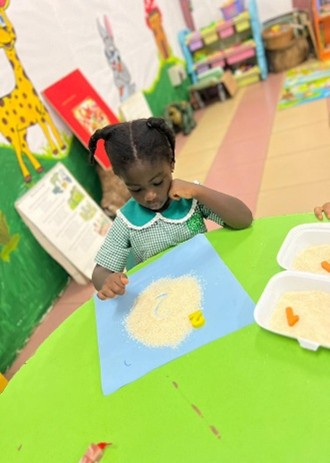
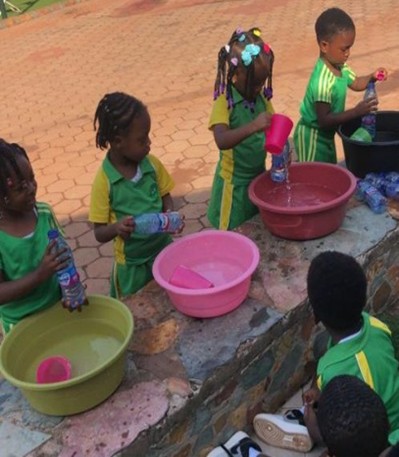
Sensory Play: Use sand play or bottle-filling activities to develop attention, focus, and fine motor skills.
-
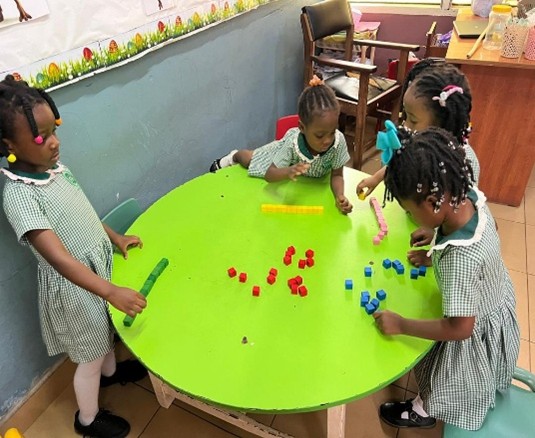
Counting Practice: Count snacks, steps, or toys to practice numbers and one-to-one correspondence.
-
Music & Rhythm: Sing nursery rhymes and clap or tap along to the beat to strengthen phonological awareness.
-
Sorting Games: Sort shapes, cubes, or blocks by color, shape, or size to enhance classification and observation skills.
-
Nature Walks: Take walks with your child, asking questions like “What objects can you see here?” or “What do we use this for?” to build environmental awareness and vocabulary.

Primary
-
Daily Reading: Spend 15–20 minutes reading with your child, taking turns with pages, and asking questions like, “What happened?”
-
Fun Math in the Kitchen: Engage your child with practical math by measuring ingredients, applying concepts like doubling and halving, following recipes, or timing steps.
-
Daily Reflection: Have your child draw one picture each day and write 1–2 sentences about how their day was spent.
-
Creative Writing: Encourage your child to write a short story (100–500 words) once a week to spark imagination and writing skills.
-
Real-World Project: Support your child in planning a simple trip, including budget, route, and packing list, to practice practical math and planning skills.
-
Science Observation: Have your child observe the weather for a week and record cloud types, fostering curiosity and scientific thinking.


Secondary
-
Weekly Mini-Project: Encourage your child to research a topic of interest, such as a hobby, place, or science, and write at least a one-page report.
-
Math Practice: Spend 15–20 minutes on targeted exercises, focusing on key areas such as algebra, ratios, percentages, and other essential concepts.
-
Multimedia Presentation: Support your child in creating a 5–10 slide presentation on a chosen topic to develop digital skills. They can present it to the family and receive constructive feedback.
-
Reading & Reflection: Support your child by providing novels, news analyses, or subject-related articles to inspire a short critique or reflective piece.
-
Practice with Past Papers: Set aside 30–45 minutes, at least three times a week, for your child to solve short past-paper questions and review their answers.
-
Concept Review: Help your child prepare for next year by reviewing key concepts from one challenging subject for 20–30 minutes, twice a week.



Thank you for your continued support and partnership. Together, we nurture our students’ growth and success. We look forward to welcoming your child back to school, refreshed and ready for an exciting Term Two.
ICS SEN Department.